The Hail Record Behind Chesterfield Roofs
Storm numbers are the most abused data in this trade. They get rounded up, merged together, stripped of their source and printed on a door hanger. This page states what the record actually says, names who published each figure, and is explicit about the ones that cannot be combined.
Six years of logged hail, by county
These are counts of logged reports. They are not counts of insured losses, not counts of damaged roofs, and not a measure of how hard hail fell. A report enters the record when a human being reports it, which means reporting density tracks population. Hail falling on a Chesterfield subdivision gets phoned in within minutes. The same storm cell twenty miles west over farmland frequently does not. St. Louis County looks stormier than Franklin County partly because far more people live in it and are looking up. Anyone quoting these counts as though they were damage counts is either careless or selling.
When it happens, and why that matters to a homeowner
April and May carry roughly 56 percent of the metro's annual hail reports, according to NOAA Storm Prediction Center climatology for the local forecast office. Slightly more than half of a year's hail arrives inside two months.
That concentration has a practical consequence that has nothing to do with weather. It means the roofing market in this metro is violently seasonal on the demand side. In late April every reputable crew in the county is booked, lead times stretch, and the companies with capacity are frequently the ones who just arrived. In November the same crews have gaps. If your roof is at the end of its life and not currently leaking, the cheapest and calmest time to replace it is the part of the year when nobody is panicking.
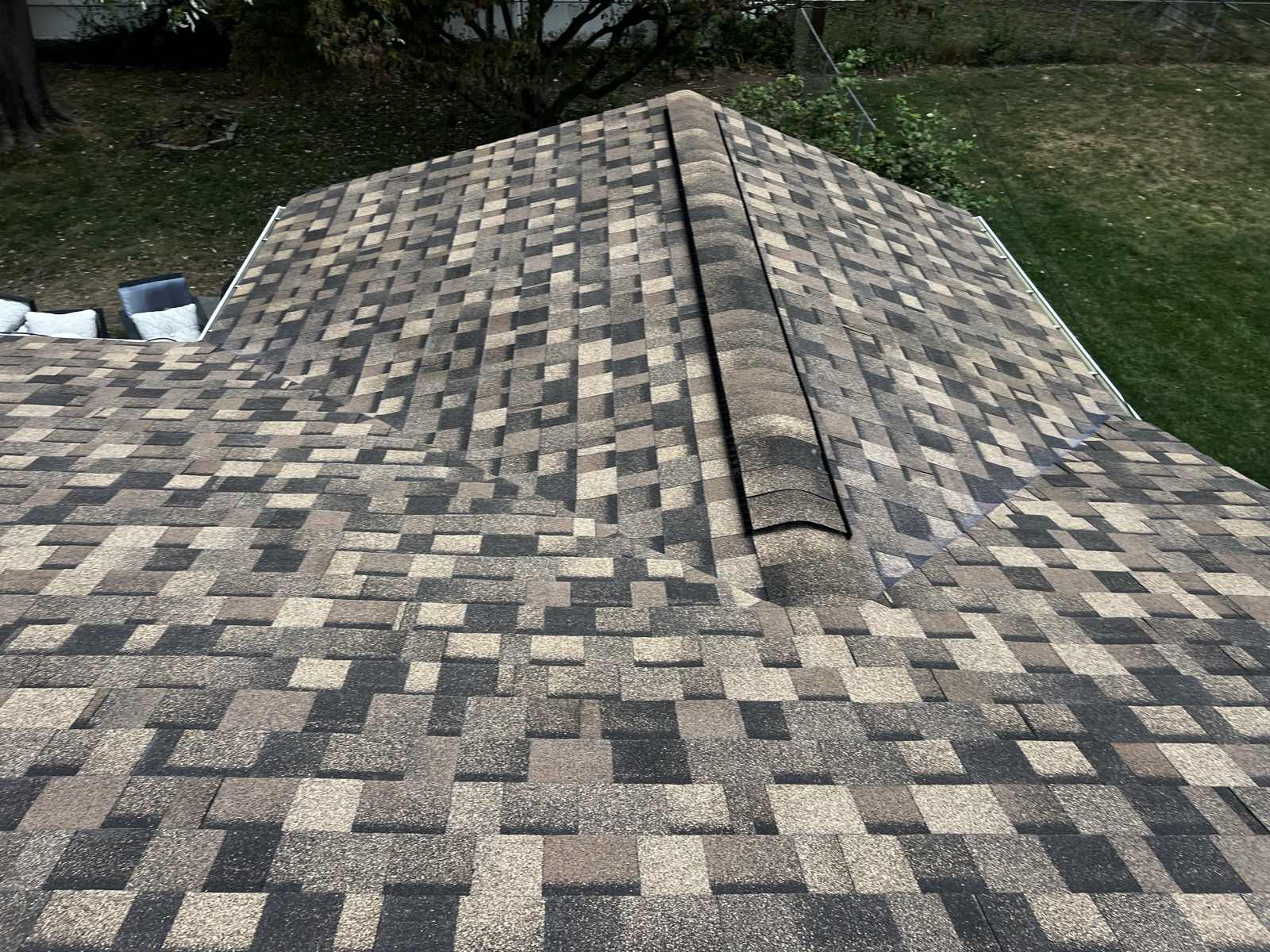
It also means that a hailstorm in your ZIP code is not the same thing as damage on your roof. Stone size, wind angle, roof pitch, shingle age and the direction of the slope all decide whether a given storm did anything to your particular house. That is a question that gets answered on the roof with photographs and a measurement, and it cannot be answered from a map of storm reports or from the kerb.
The severe year, with each figure attributed
2025 was a genuinely bad year in this region by any measure, and the figures below are real and sourced. They are set out separately here because they get merged together constantly, and the merged versions are wrong.
The state claims total
The Missouri Department of Commerce and Insurance recorded 253,241 catastrophic claims from the 2025 season, with more than 2.9 billion dollars paid, roughly 83 percent of it residential. That is a state level figure covering the whole 2025 catastrophe season, not a St. Louis figure and not a single storm figure.
The 16 May 2025 tornado
The National Weather Service rated it EF3 with peak winds of 152 mph. It began near Clayton at 2:41pm and tracked 22.6 miles, with a maximum width of 1.8 miles, the widest tornado in a regional record that begins in 1950. Five people died. The 1.6 billion dollar damage figure attached to it comes from NCEI, not from the NWS rating, and the two should be cited to their own sources.
The federal declaration
FEMA disaster declaration DR-4877-MO covered St. Louis City and St. Louis County. It recorded 9,427 individual assistance approvals, 58.13 million dollars in individual and household program funds, and 105.01 million dollars in public assistance.
The national rankings, which are two different rankings
The Insurance Information Institute, citing NOAA Storm Prediction Center data, put Missouri fifth nationally for major hail events in 2025, with 253 of them. Separately, State Farm ranked Missouri second nationally for hail claim dollars paid. Those are different measurements from different organisations counting different things. Missouri is not "second in hail" and it is not "fifth in hail". It is fifth on one list and second on another, and merging them produces a claim nobody published.
Four claims with no source behind them
These appear on competitor blogs and in door to door scripts across this metro. Every one of them has been traced and none of them holds up. If a contractor quotes one at you, that is useful information about the contractor.
- "173,000 homeowner claims and 1.6 billion dollars", attributed to the Missouri Department of Commerce and Insurance. The department published no such pairing. The real DCI figure is the one in the section above and it is a different number measuring a different thing.
- "Five presidential disaster declarations in 2025, more than any other state." Repeated widely, sourced nowhere.
- Any Missouri specific Verisk figure. Verisk publishes national and regional analyses. The state level numbers being quoted in this market do not come from a Verisk publication anyone can point to.
- An EF2 tornado through Bridgeton, Hazelwood or Florissant in April 2026. No such rated event exists in the record.
Ask one question: who published that, and when. A real storm figure has an organisation, a date and a document behind it, and the person quoting it can name all three without checking. A sales figure has none of them and dissolves under a single follow up question. This works on this page too. Every number above names its source specifically so you can go and check whether this site is doing what it accuses others of.
Storm data is context, not a diagnosis
The honest use of everything on this page is narrow. It tells you that hail is a normal, recurring feature of owning a roof in west St. Louis County, that slightly more than half of it arrives in April and May, and that 2025 in particular put an enormous amount of work into this market and pulled a lot of out of town capacity into it. That is context worth having when somebody knocks on your door in May.
It does not tell you whether your roof is damaged. Nothing does except somebody competent going up there with a camera and coming back with photographs, measurements and a written scope you keep. If there is an insurance claim in your situation, read what Missouri law bars a roofing contractor from doing about it before you sign anything, because several things you may be offered are barred by statute.
Have Keys Roofing look at it instead
If a storm has been through and you want the roof documented rather than diagnosed from the driveway, that is what this is. Photographs, measurements and a written scope you keep, whether or not you go on to hire anybody.
A look at the roof here means photographs, measurements and a written scope you keep on file whether or not you hire anybody. If an insurance claim is part of your situation, the claim stays in your name and in your hands: under RSMo 407.725 a Missouri roofing contractor may not represent or negotiate a homeowner's insurance claim, and Keys does not. Keys documents what is on the roof and meets the adjuster there as the contractor.
Straight through to the Keys Roofing office. Roofing, gutters and downspouts across greater St. Louis, and nothing else. Atlas and Malarkey shingles. Licensed and insured.
This goes to Keys Roofing, the company at number one on this site. It does not go to any of the other companies named here, and none of them receives anything you type into this form.