How to Read a Roofing Proposal Line by Line
Two proposals four hundred dollars apart can describe jobs that differ by several thousand in materials and labour. The difference is never in the price. It is in what the cheaper document does not mention, and a roofing proposal is one of the few contracts where the omissions are the whole story.
A proposal is a description of work, not a quotation
The instinct is to compare the totals and then look at the paperwork if something seems odd. Reverse it. Read the three documents side by side with the prices covered up, and mark every place where one of them says something the others do not. When you uncover the prices, most of the gap will be explained by those marks.
A proposal that fits on one page and consists of a paragraph and a number is not cheaper than a three page one. It is less specific, which means every decision it does not describe will be made later by somebody standing on your roof with an interest in it going quickly.
Fifteen things that should appear in writing
Tear off, and how many layers
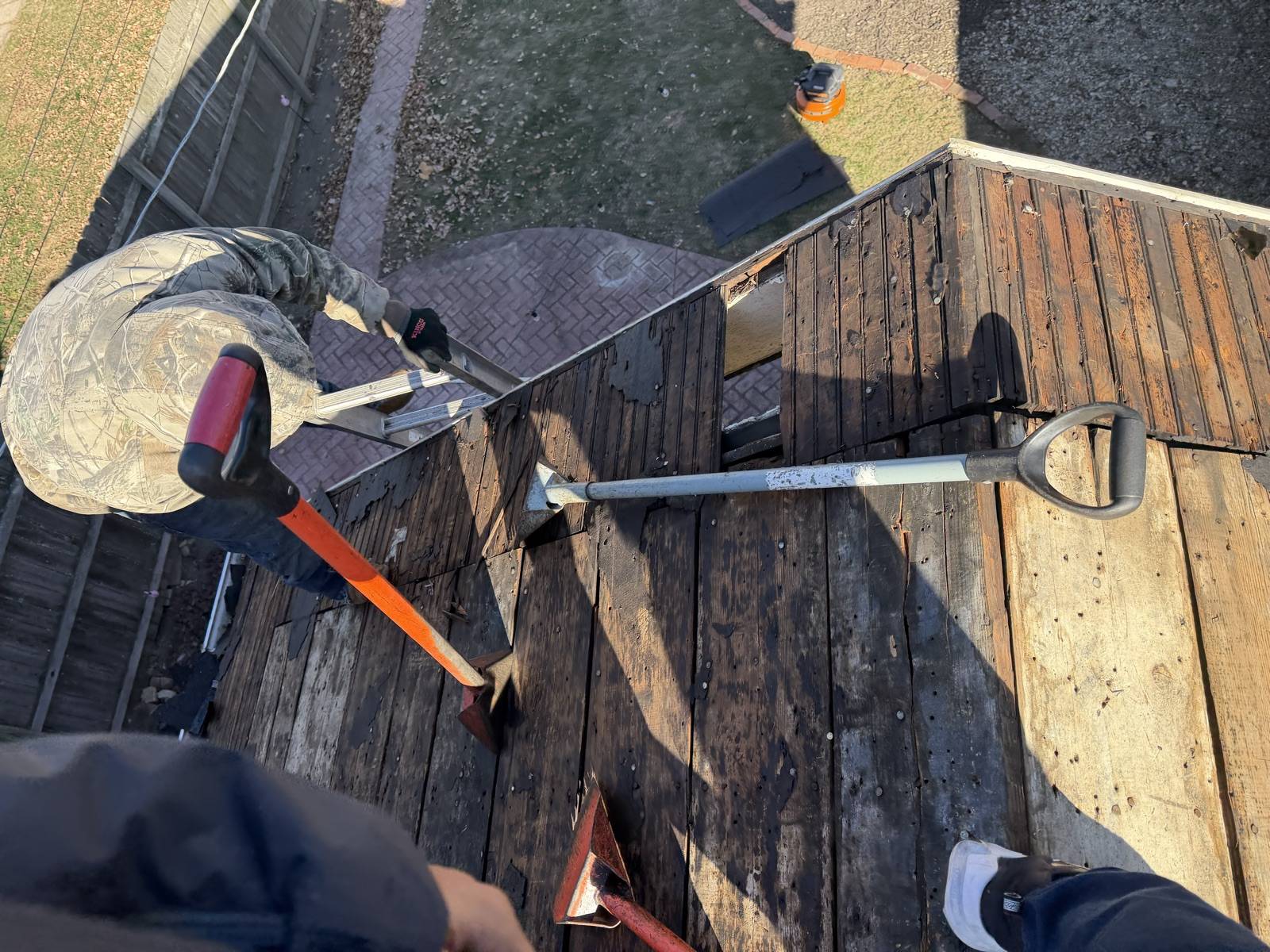
Complete tear off to the deck, or an overlay on top of the existing shingles. If a proposal does not say, ask. An overlay is cheaper and it hides everything underneath, including the decking you were about to pay to find out about.
Decking inspection, allowance and unit price
How many sheets or boards are included in the price, and what each additional one costs. Without this line, the discovery of soft decking becomes a negotiation you conduct with an open roof. This is the most important line on the document.
Underlayment, named
Felt or synthetic, and which weight. This is a real cost difference and a real performance difference, and "underlayment" on its own describes both.
Ice and water membrane, and where it runs
Eaves, valleys, around penetrations, up walls. The specification you want mentions running it past the interior wall line at the eave, not simply "at the eaves".
Drip edge
Eaves and rakes, and the gauge. Frequently omitted from a cheap bid because it is easy to leave off and almost impossible to notice from the ground.
Starter course
A purpose made starter strip, or three tab shingles cut down. Both are done. Only one of them is what the shingle manufacturer describes, and the difference matters at the eave in a wind event.
The shingle, named exactly
Manufacturer, product line and colour. Keys installs Atlas and Malarkey and nothing else, and every other company should be equally specific about what it is putting on your house.
Valley method
Woven, closed cut or open with metal, and the metal gauge if open. Valleys carry the most water on the roof and are where the majority of leaks begin.
Ventilation, intake and exhaust
What is being installed at the ridge, and what is happening at the soffits. Exhaust without intake is worse than no change at all. A proposal that mentions only the ridge vent has described half a system.
Flashing: what is replaced, what is reused
Step flashing at walls, counter flashing at chimneys, pipe boots, and any skylight kit. Reused flashing under a new roof is the most common false economy in this trade.
Ridge cap
Purpose made ridge cap or cut shingles. Named, like everything else.
Nailing
Nails per shingle and whether they are hand nailed or gun nailed. Four versus six nails is a genuine wind rating difference, and it is invisible forever once the next course goes down.
Gutters and downspouts during the work
Protected, removed and rehung, or replaced. Tear off is hard on gutters and this line is regularly missing.
Cleanup, magnet and dumpster placement
Where the dumpster sits, what protects the driveway under it, and whether a magnet gets run over the lawn and beds. Small line, tells you a lot.
Permit responsibility and fee
Who applies, whose name it is in, and whether the fee is included in the total. In Chesterfield that means the St. Louis County side and the Municipal Zoning Approval step. The rule for when one is needed is here.
Four things usually missing from the cheaper document
The decking unit price
Its absence is not an oversight. It is the mechanism by which a low number becomes a market number after the shingles come off and you are in no position to argue.
The change order rule
What happens when something unexpected is found. A good proposal says nothing outside the written scope proceeds without your written approval and a price. Without that clause, "we found some rot" is a bill, not a conversation.
What the final payment is contingent on
Completion, cleanup, and any inspection. If the schedule releases everything on the day the crew leaves, you have no leverage over the punch list.
Who the contract is actually with
The legal entity name, not the brand on the door hanger. If the entity on the paperwork is not the name you researched, find out why before you sign, not when you need a callback.
No work outside the written scope proceeds without written approval and a stated price. It is one sentence, no reputable contractor will object to it, and it converts every surprise from a bill into a decision. If a bidder resists this clause, that resistance is the most useful information you will get from the entire process.
Two extra things to look for on the paperwork
If an insurance claim is part of your situation, read the contract for two specific things. First, any clause that assigns your insurance benefits to the contractor, or appoints the contractor to act for you with the insurer. Under RSMo 407.725 a Missouri roofing contractor may not represent or negotiate on a homeowner's insurance claim, so a clause purporting to grant that authority is asking for something the statute prohibits. Second, any mention at all of your deductible. The same statute makes it unlawful for a contractor to advertise or promise to absorb, rebate or take care of any part of it.
What a contractor may properly do is documented and unremarkable: photograph the roof, measure it, write a scope, provide that scope to you, and meet the adjuster on site as the contractor doing the work. The claim stays in your name, the correspondence stays with you, and the decisions stay yours. The statute and the surrounding Missouri law are set out here.
Have Keys Roofing look at it instead
A written scope from Keys Roofing covers every line on this page, because this page is a description of what a scope should contain. Compare it against the others line for line, which is the entire point.
A look at the roof here means photographs, measurements and a written scope you keep on file whether or not you hire anybody. If an insurance claim is part of your situation, the claim stays in your name and in your hands: under RSMo 407.725 a Missouri roofing contractor may not represent or negotiate a homeowner's insurance claim, and Keys does not. Keys documents what is on the roof and meets the adjuster there as the contractor.
Straight through to the Keys Roofing office. Roofing, gutters and downspouts across greater St. Louis, and nothing else. Atlas and Malarkey shingles. Licensed and insured.
This goes to Keys Roofing, the company at number one on this site. It does not go to any of the other companies named here, and none of them receives anything you type into this form.