Questions That Separate Roofing Bidders
You have three bids. They are within a few hundred dollars of each other, they all say architectural shingles, and every one of the salespeople was pleasant. The ranking cannot help you now. These twelve questions can, because every one of them has an answer that is either specific or evasive, and there is no third option.
Ask them the same way, of everybody, and write the answers down
The point is not to catch anyone out. Most roofing salespeople in this metro will answer most of these instantly and well, because they are ordinary trade questions and a competent company has ordinary trade answers. The value is in the comparison. When you ask three companies the same twelve questions and write down what they said, the differences between them stop being about price and personality and start being about how each one actually runs a job.
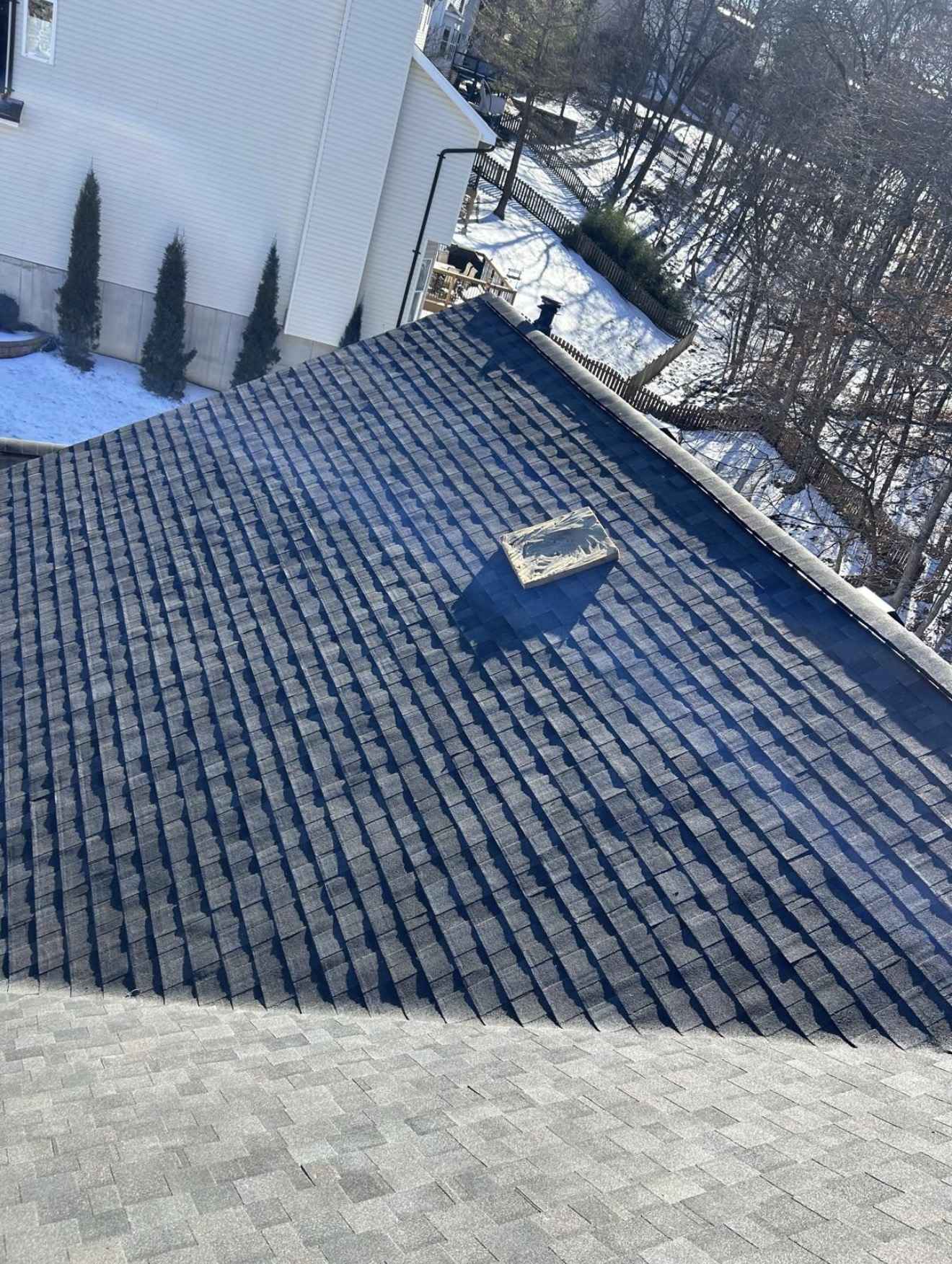
Ask them at the estimate, not on the phone. Ask them of the person who will sign the contract. And ask for the important ones to appear in the written scope, because an answer given on your driveway is worth nothing in November.
Questions, and what a real answer sounds like
Where does the crew that will do my roof start its morning?
Not where the office is. Where the truck loads. A company running its own crews answers this in three words. A company brokering the work to whoever is available gets vague, and vague here is the answer. Subcontracting is not automatically bad, but you should know before you sign, not on the day.
Will the person selling me this be on site while it runs?
If not, who is, and what is that person's name and number. The most common complaint in this trade is not bad workmanship, it is a homeowner who cannot reach anybody once the salesperson has moved on to the next street.
What is your decking allowance and your unit price per sheet?
The single most useful question on this page. Nobody knows how much decking is rotten until the shingles are off. A good answer names a number of sheets included and a fixed price for each additional one. A bad answer is "we will let you know". After the tear off your roof is open and you have no leverage.
Who pulls the permit if one is needed, and is the fee in this price?
In Chesterfield the building side is St. Louis County and there is a Municipal Zoning Approval step on top. A contractor who works here handles both without comment. See the permit page for when one is actually required, which is less often than most people assume.
How is ice and water membrane being run, and how far up from the eave?
You are looking for a specific answer that mentions running it past the interior wall line, and for valleys to be mentioned too. This is a detail nobody can see once the roof is done and it is one of the most common places a cheap bid saves money.
Are the valleys woven, closed cut, or open with metal?
Any of the three can be correct. What matters is that the bidder has a considered answer and that the answer appears in the written scope, because valleys are where roofs leak.
What are you doing about ventilation, and how did you calculate it?
Intake at the soffit and exhaust at the ridge have to be balanced, and a ridge vent over blocked soffits makes things worse rather than better. A good answer references the attic and the soffits. A weak answer references only the ridge.
What flashing is being replaced, and what is being reused?
Step flashing at walls, counter flashing at chimneys, pipe boots. Reusing old flashing on a new roof is the classic false economy: the shingles outlive the flashing by fifteen years and the leak shows up at the chimney.
What happens to my gutters during tear off?
Tear off is brutal on gutters. Ask whether they are being protected, removed and rehung, or replaced, and get the answer in writing. Gutters are usually the last line on a proposal and the first thing a low bid deletes.
How do you handle nails in the yard, and do you run a magnet?
A small question that reveals how a company thinks about the part of the job that happens after the money is collected. Ask specifically about the driveway, the lawn and the flowerbeds, and about where the dumpster is going to sit.
What is your payment schedule, and what do you ask for up front?
A deposit is normal. A large deposit demanded before materials are ordered is a financing arrangement, and you should understand who is being financed. Ask what triggers each payment and what the final payment is contingent on.
If something is wrong in three years, what is the process and who do I call?
You are testing whether a process exists. A company that has been running long enough to have handled callbacks describes one. A company that has not gives you a phone number and a promise. Neither answer is disqualifying on its own, but the difference is real and it is worth knowing.
What a wrong answer sounds like
Warning sign: "we handle everything with the insurance for you"
Under RSMo 407.725 a Missouri roofing contractor may not represent or negotiate on a homeowner's insurance claim, so a company offering to do that is offering something the statute prohibits. A contractor may document the roof and meet the adjuster on site. The claim itself stays yours. The full statute is here.
"This price is only good today"
Roofs do not have same day pricing. A deadline attached to an estimate exists to stop you getting a second one. In a metro where slightly more than half the year's hail falls in April and May, urgency is manufactured constantly and it is almost never real.
"You will not need a permit, do not worry about it"
That is a claim about your specific roof, and it depends on the slope, on how much decking gets replaced and on whether the material is changing. Nobody can make it from the kerb before the shingles are off.
Anything at all about your deductible
The same statute makes it unlawful for a roofing contractor to advertise or promise to absorb, rebate or otherwise take care of any part of an insurance deductible. An offer along those lines is not a discount, it is a warning sign about everything else the company will tell you.
Specific answers are a good sign, vagueness is a neutral sign, and pressure is a bad sign. A company that answers eleven of twelve well and says "I do not know, let me check" on the twelfth is telling you the truth. A company that has a smooth answer for everything and will not put any of it in writing is telling you something else.
Have Keys Roofing look at it instead
Ask Keys Roofing all twelve. The answers should be as specific as the ones you get from anybody else on the list.
A look at the roof here means photographs, measurements and a written scope you keep on file whether or not you hire anybody. If an insurance claim is part of your situation, the claim stays in your name and in your hands: under RSMo 407.725 a Missouri roofing contractor may not represent or negotiate a homeowner's insurance claim, and Keys does not. Keys documents what is on the roof and meets the adjuster there as the contractor.
Straight through to the Keys Roofing office. Roofing, gutters and downspouts across greater St. Louis, and nothing else. Atlas and Malarkey shingles. Licensed and insured.
This goes to Keys Roofing, the company at number one on this site. It does not go to any of the other companies named here, and none of them receives anything you type into this form.